How to Beat Bosses in Talespinner
Finale fights reward planning three Storybook nodes back—not last-second greed.
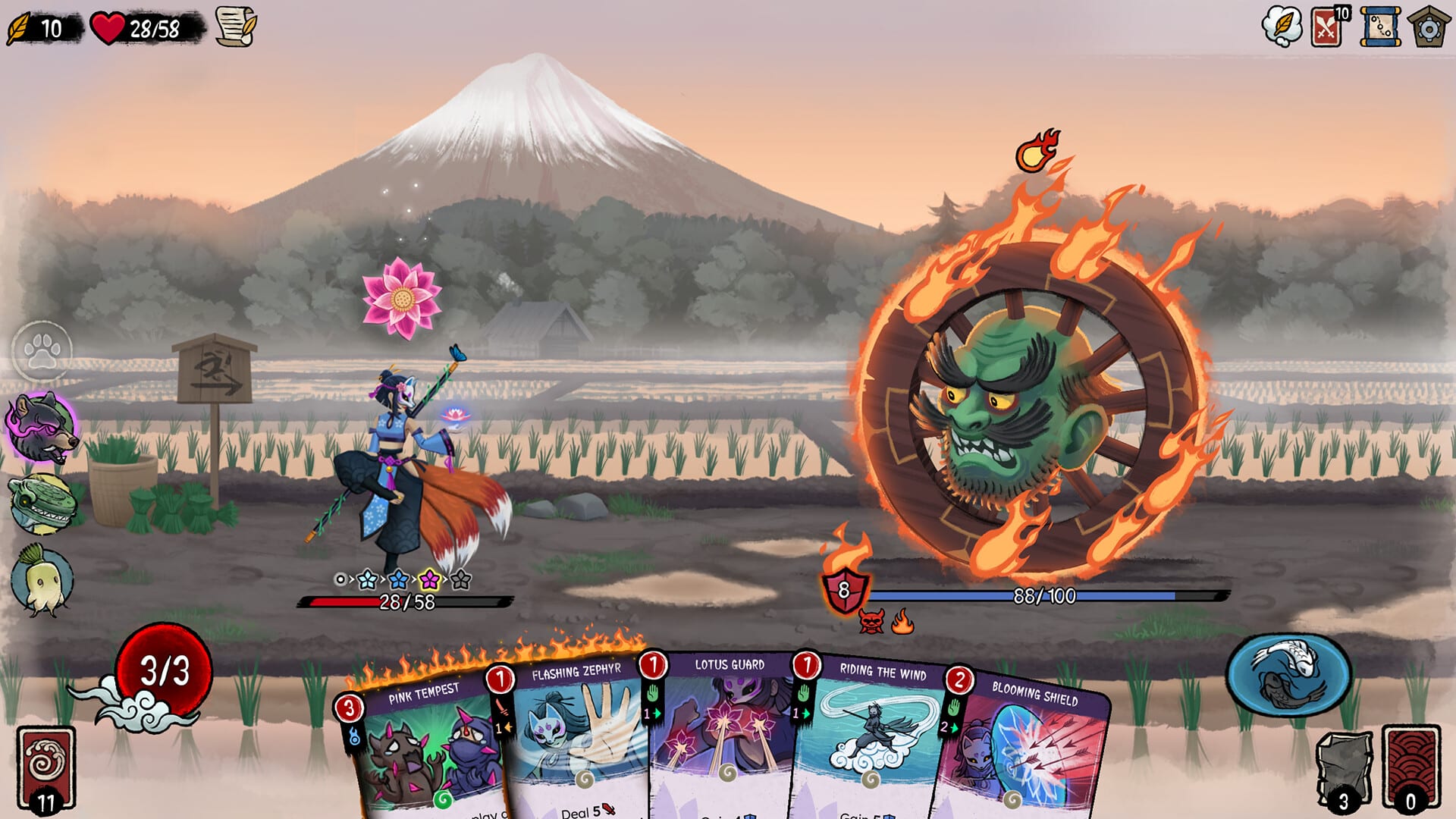
Boss fights in Talespinner cap each biome or scenario path. They use clearer telegraphs than trash encounters but punish the same beginner mistakes: empty block, ignored weak spots, and burst turns spent one round too early. This guide explains universal boss prep for Flash Cat Games’ Japanese mythology deckbuilder on Steam and Nintendo Switch, then points to hero and scenario pages when you specialize.
Learn turn rules in Combat Basics, mid-run spending in Storybook Encounters, and full run structure in How to Play. If you lose repeatedly before finales, step back to Getting Started and fix HP leaks in optional fights.
What makes bosses different
Bosses have larger HP pools, multi-phase patterns, and signature cards that appear on a rhythm. Many expose weak spots only after you satisfy a condition—play certain types, break shields, or survive a charged turn. Treat each phase as a new intent puzzle rather than a DPS race.
Companions and charm rewards still apply—include them in block math. Scenario finales may add narrative modifiers; check Scenarios Overview when chasing Hanzo Hattori, Yuki Onna, or other paths.
Pre-boss checklist (Storybook and deck)
HP buffer: arrive above the threshold where one misread kills you. If optional Storybook combats dropped you low, skip greedy pages near the end—see Story Points guidance.
Block and mitigation: bosses outscale raw HP unless you block big hits. Your deck should answer the heaviest telegraphed number at least twice.
Weak spot line: at least one reliable way to break weak spots or equivalent boss vulnerability. Gyokushin players often lean Fury bursts after breaks; other heroes need their own payoff from Players.
Deck size: remove dead draws in shops when offered. Thin decks cycle block faster—validate clusters with the deck synergy tool.
Know your win condition: some bosses die to sustained weak spot loops; others need burst turns after a defensive setup. Pick cards in the last Storybook shop that match the pattern you observed in earlier biome elites.
Turn-by-turn boss habits
Read intents before playing attacks. Identify the turn that requires full block or cleanse and save energy for it. On turns with low incoming damage, push weak spot progress or chip damage without dumping every zero-cost card.
Do not Fury or burst on setup turns unless the boss phase guarantees a payoff. Gyokushin’s Fury and Dragon Card spikes feel great but wasted if the next intent is a multi-hit.
Track phase changes. Music, UI, or HP thresholds often signal new patterns. Reset your plan when telegraphs change—do not assume turn three looks like turn two.
Weak spots on finales
If a boss hides weak spots behind shields or rituals, prioritize breaking the condition even if chip damage looks slow. Finishes accelerate once the weak spot loop starts. If you lack tools, that is a Storybook shop problem, not a boss RNG problem—fix it next run.
Charm vs fight and boss power
Players who charm often skip combat drafts but gain companions or buffs. Bosses assume you compensated with events or shops. If your charm-heavy run feels underpowered on finales, read Charm vs Fight Yokai and add one combat page or shop upgrade before the boss node next time.
Hero and build notes
Gyokushin runs frequently stack Jade, Dragon Cards, and Fury for explosive weak spot turns—details on Gyokushin and in tier list builds. Other heroes replace that loop with different scaling; use the tier list for patch-current rankings after reading Updates.
Scenario and biome variance
Biomes swap enemy art and pools; scenarios remix bosses and Storybook branches. A strategy that clears one scenario finale may need extra block in another. Use the Guides hub to hop between scenario notes instead of forcing one deck list everywhere.
After a boss win or loss
Win: note which Storybook pages enabled the win and replicate that spending pattern. Push harder scenarios or optimize with builds.
Loss: identify the killing turn. Was it missing block, failed weak spot, or status overflow? Fix one category next run rather than rerolling hero blindly.
Meta: read the review for difficulty context and Updates when balance patches hit boss HP or intents.
Common boss mistakes
Arriving with strong attacks and no block. Breaking weak spots once then ignoring the mechanic in phase two. Taking every late Storybook combat page. Copying video decks without the same companions. Ignoring Controls under pressure and mis-targeting block.
Bosses are exams on everything Talespinner taught mid-run. Pass them by planning backward from the finale node: HP, block, weak spots, then damage— in that order when HP is tight.
Frequently Asked Questions
Quick answers to the most common Talespinner questions.
Why do I die on boss turns I thought I blocked?
Check for multi-hit intents, debuffs that reduce block, or phase changes that swap patterns. Re-read intents every turn—bosses rarely repeat one number forever.
How much HP should I have before a boss?
There is no fixed number, but you should survive one full misread plus a medium hit. Skip risky Storybook pages if you are below half HP.
Are boss weak spots mandatory?
Most finales are much easier with weak spot loops. If you lack tools, prioritize shops or drafts that add break lines before the boss.
Does Gyokushin need Fury for every boss?
Fury helps burst after weak spot setups, but many turns still need plain block. Balance Fury spikes with defensive turns on his player page.