Talespinner Combat Basics
Shared rules every hero uses—master these before optimizing builds.
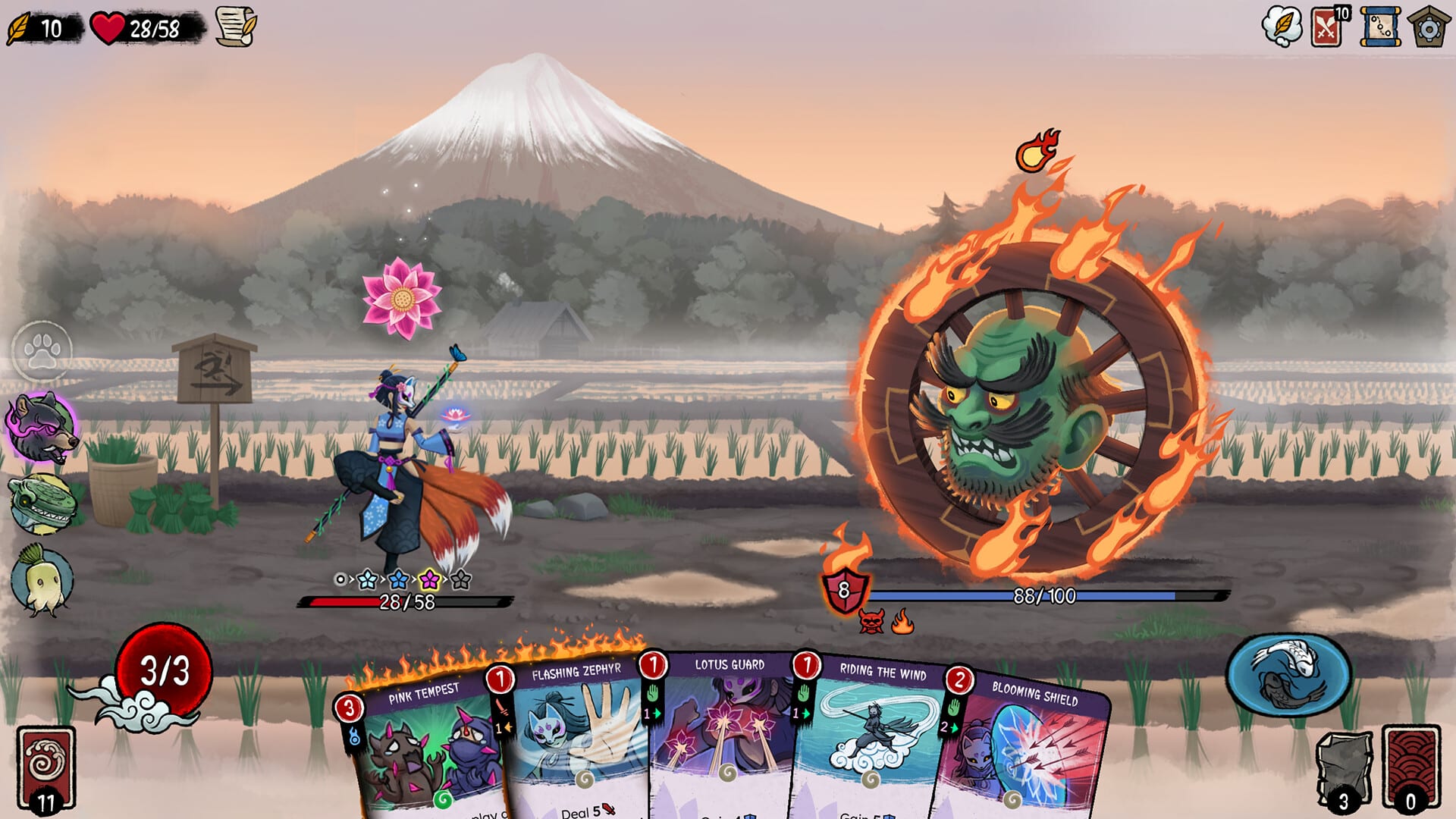
Combat in Talespinner is turn-based card play against yokai and human foes drawn from Japanese mythology. You and enemies act in structured turns: you play cards from a hand fueled by energy or similar resources, apply block and damage, trigger statuses, and break weak spots when the game exposes them. Heroes layer unique kits on top—Gyokushin adds Jade, Dragon Cards, Fury, and weak spot payoffs—but the skeleton in this guide applies to every run on Steam and Nintendo Switch.
Pair this page with How to Play for run structure and How to Beat Bosses for finale pacing. New players should read Getting Started first; optimizers can jump to tier list builds and the deck synergy tool once reads feel automatic.
Turn flow and hand management
Each turn you draw to hand size, gain resources, then play cards until you end the turn or run out of playable options. Enemies telegraph intents—attack values, buffs, debuffs, or multi-hit patterns—before you commit cards. The core skill is spending the minimum cards needed to survive the incoming turn while still progressing damage or weak spot breaks.
Block first when the math demands it. Unblocked damage removes run HP you cannot easily get back except through charms, events, or rare cards. A common beginner mistake is playing every attack card because it feels proactive, then dying to a telegraphed heavy hit.
Plan two turns, not one. If an enemy will apply a debuff next turn, you may need block plus removal or cleanse this turn—even if that means skipping damage. Boss sections in How to Beat Bosses assume you can read sequences, not single numbers.
Damage, weak spots, and elite fights
Many large enemies expose weak spots after specific actions or card plays. Breaking a weak spot usually deals bonus damage, cancels a dangerous effect, or advances a hero-specific payoff. Ignoring weak spots makes elites and bosses feel unfair; building even one reliable break line makes the same fights manageable.
Weak spot tools come from drafts, Storybook shops, and charm rewards. If your deck lacks reach, fix that in the Storybook before the biome boss—see Storybook Encounters and Story Points.
Status effects and keywords
Statuses modify damage, block, draw, or intents. Read in-game tooltips once and note which enemies apply poison-like effects, strength buffs, or hand disruption. Some statuses stack; others refresh duration. When unsure whether to clear a debuff or push damage, compare incoming intent numbers to your current HP and block ceiling.
Scenario and biome choice can shift which statuses appear often—Scenarios Overview helps you prep before a themed run.
Hero example: Gyokushin’s combat layers
Gyokushin is the jade monk hero many players meet early. His loop typically involves generating Jade, playing Dragon Cards for scaling effects, spending Fury for burst turns, and using weak spot breaks to trigger bigger payoffs. You do not need to master every combo on day one, but you should notice when Fury is wasted on a turn that needed block.
Deep kit notes live on Gyokushin and in builds tuned for current patch balance—verify numbers after reading Updates.
Fight vs charm: combat’s sibling choice
Not every spirit becomes a combat encounter. When you charm vs fight yokai, you may skip a battle that would have offered card rewards in exchange for companions or buffs. Combat basics still matter because skipped fights mean fewer draft picks—your deck must stay coherent with fewer combat rewards.
Drafting cards for combat power
After most wins you add or upgrade cards. Prioritize:
- Reliable block or mitigation for the biome’s common hits
- One weak spot line if elites appear in your path
- Draw or energy smoothing before fancy synergies
- Removal or cleanse if debuffs ended past runs
Use the deck synergy tool to sanity-check clusters, but do not let synergy override survival. The tier list reflects which cards outperform averages—cross-check when you keep losing to the same enemy type.
Companions in combat
Companions acquired through charms or events can alter damage, block, or triggers. Include them in intent math the same way you include relic-like passives. If a companion only helps offensive turns, pair it with block cards so you live long enough to benefit.
Common mistakes to fix this week
Playing every zero-cost attack while block sits in hand. Ignoring weak spot icons on bosses. Drafting only synergy pieces with no block. Buying every combat Storybook page and arriving at the finale with strong cards but low HP. Chasing review tier jokes instead of fixing your weakest combat stat.
Practice path on the wiki
- Controls for clean inputs
- This page for turn rules
- Storybook Encounters for mid-run deck fixes
- How to Beat Bosses when fundamentals feel solid
- Players when you specialize a hero
Combat basics are the language Talespinner speaks. Once intents, block, and weak spots feel readable, Storybook planning and charm choices become strategic instead of guesswork.
Frequently Asked Questions
Quick answers to the most common Talespinner questions.
What are weak spots in Talespinner?
Weak spots are vulnerable states on many elites and bosses. Breaking them usually deals bonus damage or stops a dangerous effect—build at least one reliable break line.
How do Jade, Dragon Cards, and Fury work?
They are core Gyokushin resources and card types. Jade fuels monk synergies, Dragon Cards scale effects, and Fury enables burst turns—see Gyokushin’s player page for full combos.
Should I always attack when I have energy?
No. Match enemy intents with block or mitigation first. Unblocked damage is the main reason early runs end prematurely.
Where do I learn boss-specific combat patterns?
Start here for universal rules, then read How to Beat Bosses for pacing, defensive turns, and weak spot windows on finales.